Highlights
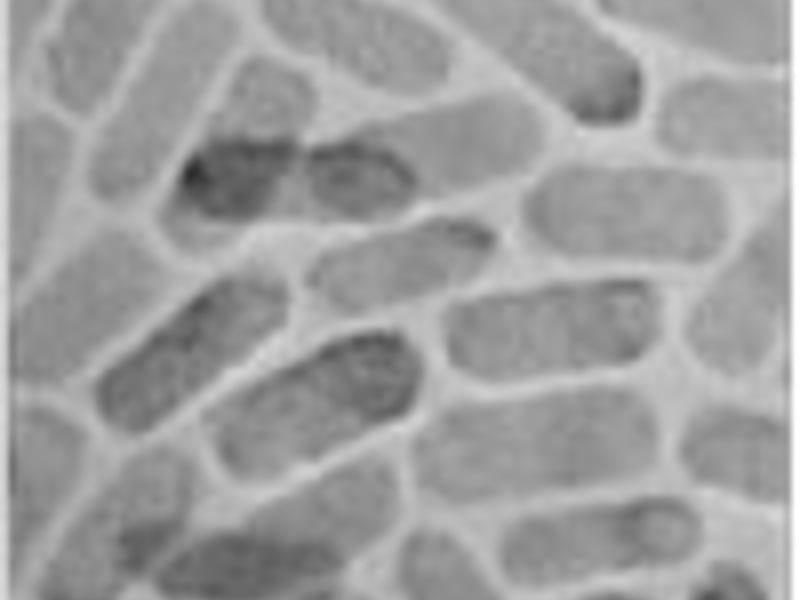
Red, Yellow, Green, and Blue Lasing Using Colloidal Quantum Wells
Chunxing She [University of Chicago] Igor Fedin [University of Chicago] Dmitriy S. Dolzhnikov [University of Chicago] Peter D. Dahlberg [University of Chicago] Gregory S. Engel [University of Chicago] Richard D. Schaller [Argonne National Lab/ Northwestern University] Dmitri V. Talapin [University of Chicago/ Argonne National Lab]
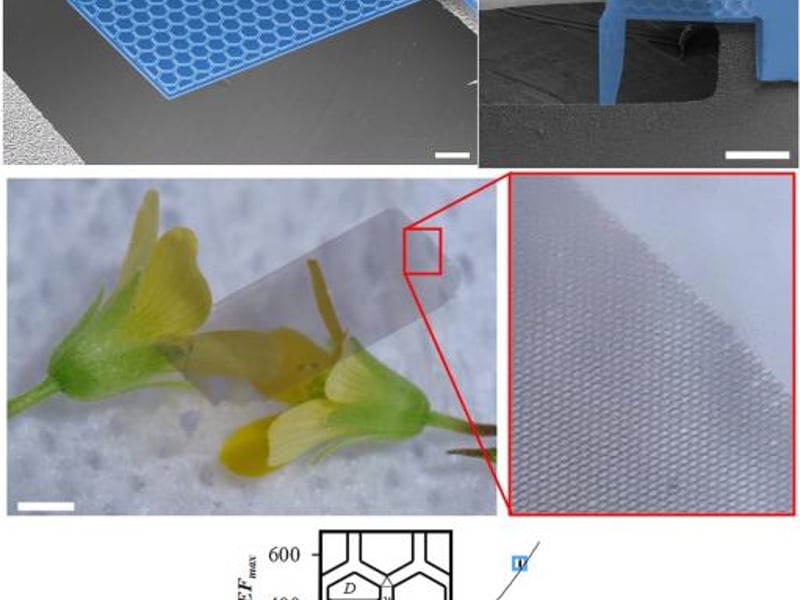
Plate Mechanical Metamaterials
I. Bargatin & P. K. Purohit (Seed 5)
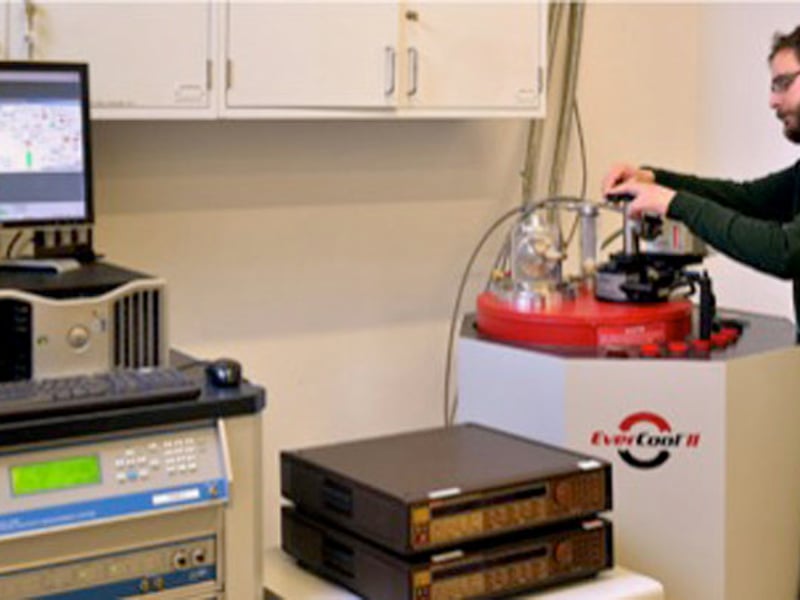
Helium Conservation in the Property Measurement Facility (SEF)
J. M. Kikkawa
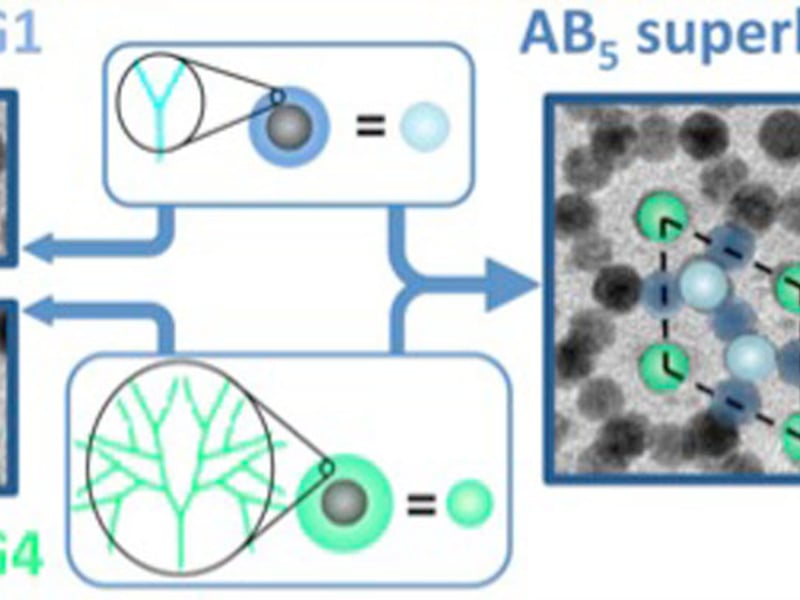
Dendrimer-Nanocrystal Building Blocks
L. Hough, C. B. Murray, & B. Donnio (IRG-4)
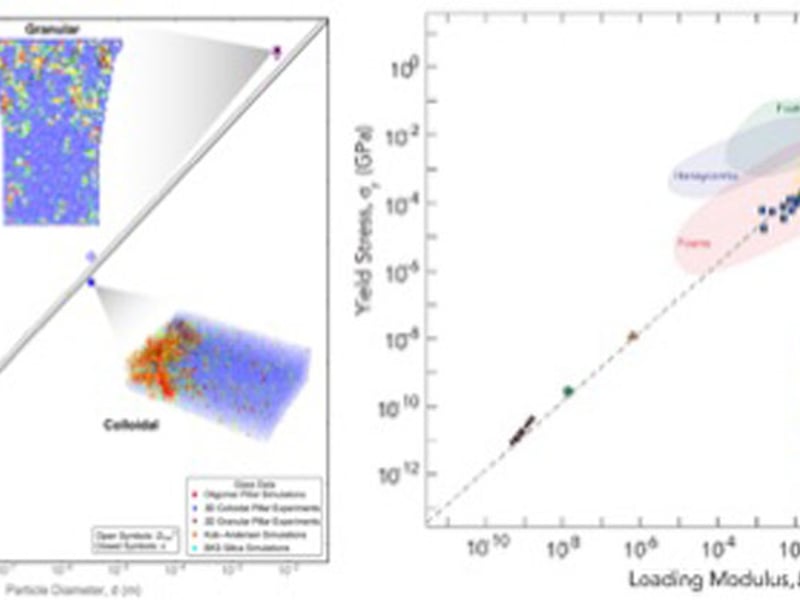
Universality of Microscopic Structure and Macroscopic Mechanical Response in Disordered Packings Across Length Scales
P. E. Arratia, R. W. Carpick, D. J. Durian, D. S. Gianola, D. Lee, A. J. Liu, R. Riggleman, A. G. Yodh (IRG-3)
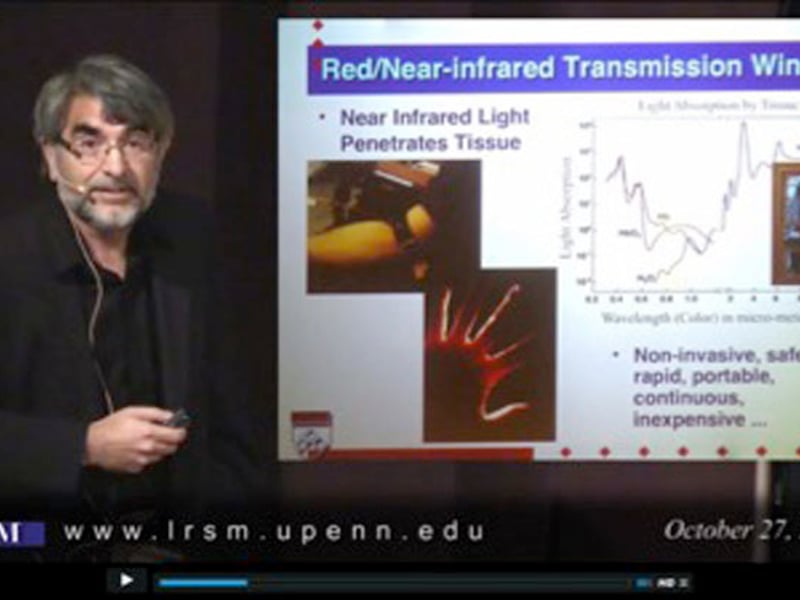
Video Archives of Outreach Presentations
A. R. McGhie & M. W. Licurse
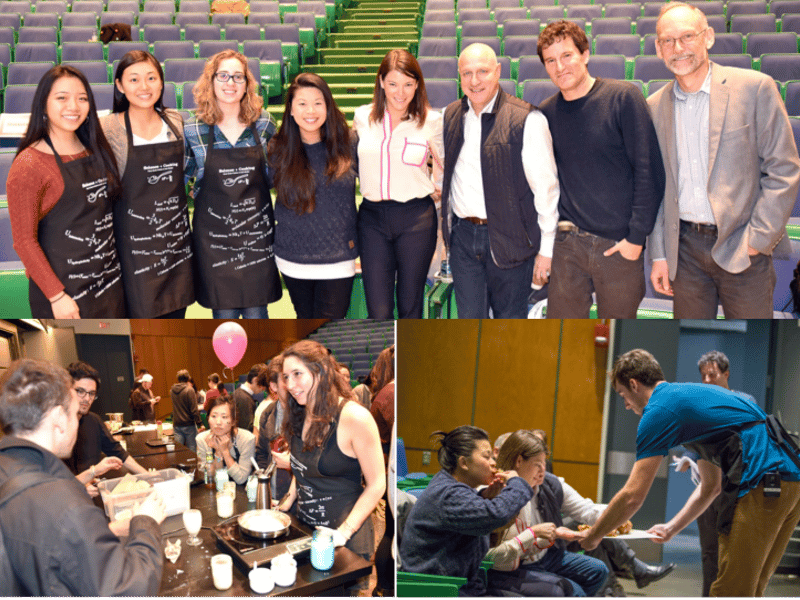
Top Chefs at the MRSEC
Michael Brenner and David Weitz (School of Engineering and Dept. of Physics)
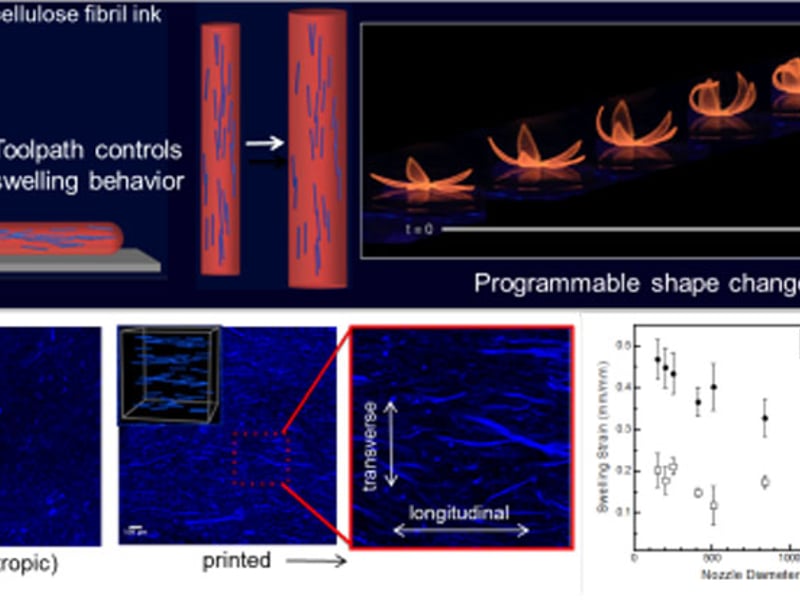
Biomimetic 4-D Printing
Jennifer Lewis and Lakshiminarayanan Mahadevan (School of Engineering)
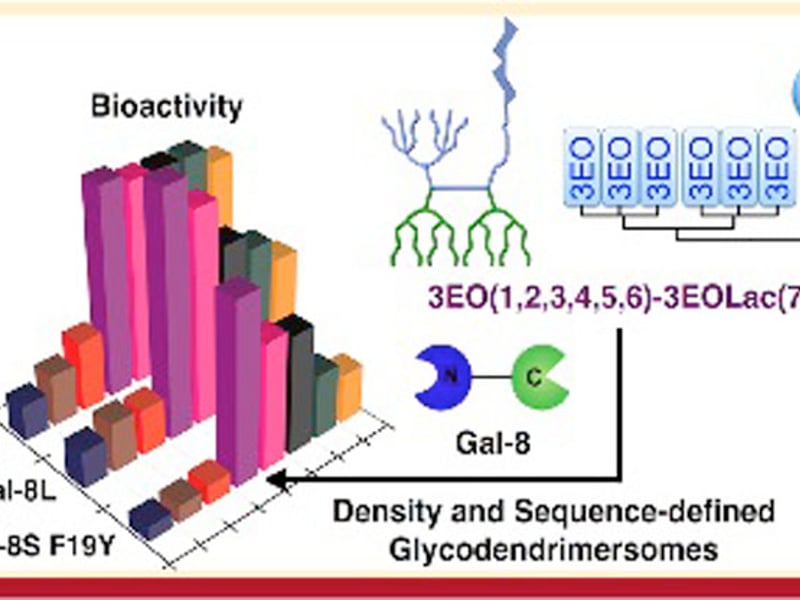
Glycodendrimers Can Sense Variants of Lectins by Agglutination
V. Percec, M. L. Klein, & D. A. Hammer (IRG-2)
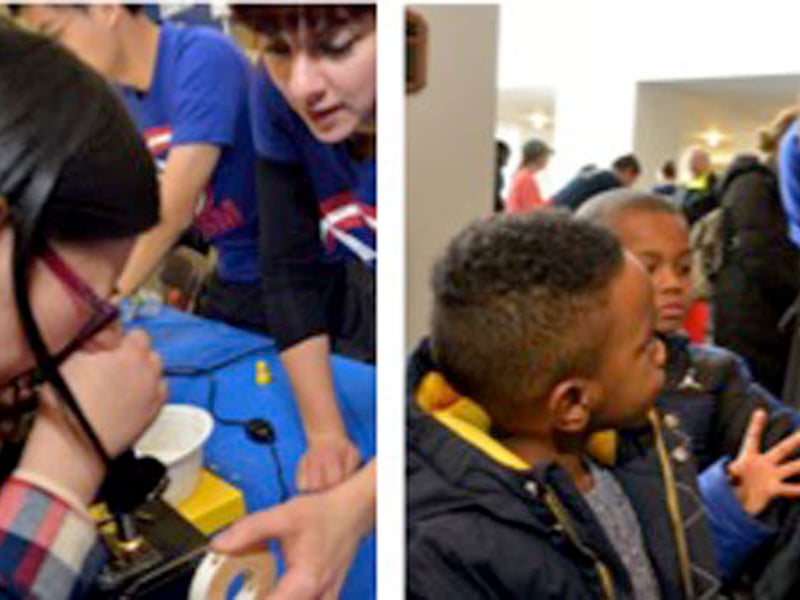
6th Annual Philadelphia Materials Day
A. R. McGhie & M. W. Licurse
Showing 571 to 580 of 1433