Established in 1994, the Princeton Center for Complex Materials (PCCM) at Princeton University is dedicated to pushing the frontiers of complexity in materials science - bringing together over 30 faculty from six departments in the natural sciences and engineering. Currently funded by the NSF (DMR-1420541), the PCCM supports three Interdisciplinary Research Groups (IRGs) and several seed projects. The current IRGs are focused on research in the newly discovered topological phases of electrons and materials, surface and dynamics in confined polymers, and the development of ultra-coherent quantum materials. In addition to forefront materials research, the center sponsors an active educational outreach program involving elementary, middle and high schools, as well as a Research Experience for Undergraduates (REU) and teacher programs. Industrial collaboration is another important aspect of PCCM's research initiatives.
 Brochure
Architecting soft functional materials with capillary instabilities (Seed 10)
Development of Ultra-Coherent Quantum Materials (IRG 3)
Exploring Correlated and Topological Quantum Phases in Twisted Bilayer Crystals (Seed 11)
Harnessing the "Rules of Life" to enable bio-inspired soft materials
From multi-phase coexistence to synthetic nucleosomes (SuperSeed 8)
Molecular Packing and Efficient Triplet Harvesting in Singlet Fission(SEED 6)
Nanostructured copolymers with semicrystalline hydrophobic domains prepared by transition metal catalysis (Seed 1)
NEW DIAMOND COLOR CENTERS FOR QUANTUM COMMUNICATION (Seed 5)
New Semiconductors for Solar Fuel Synthesis (Seed 4)
Novel nanostructures for nonlinear frequency conversion (SEED 7)
Organic Thin-film Bipolar Junction Transistors (Seed 2)
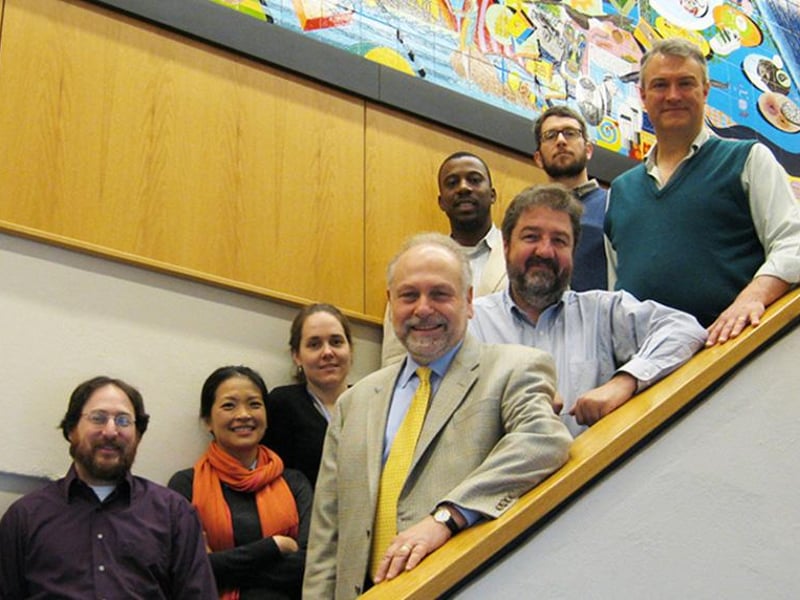
Structure and Dynamics in Confined Polymers (IRG 2)
Synthesis of new topological materials (Seed 9)
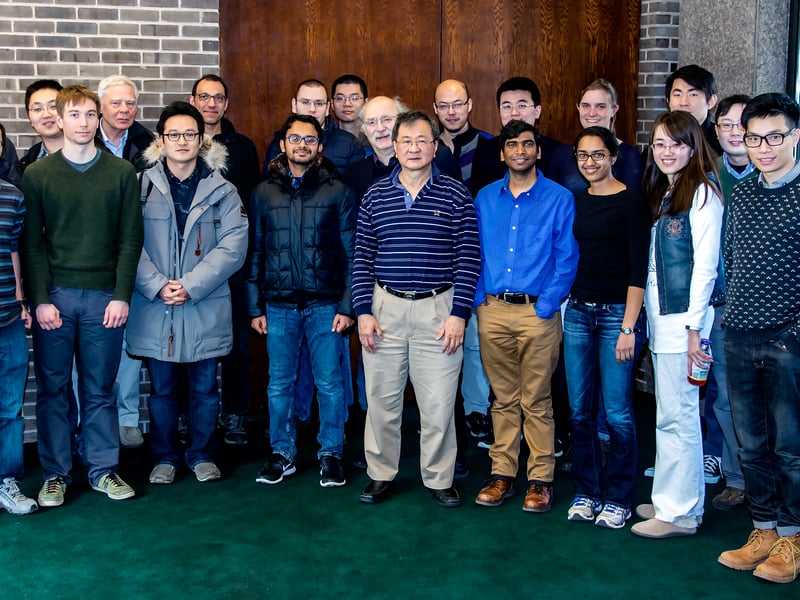
Topological Phases of Matter and Their Excitations (IRG 1)
What is the Atomic Structure of Sustainable Concrete? (Seed 3)