Highlights
May 28, 2024
Columbia University in the City of New York
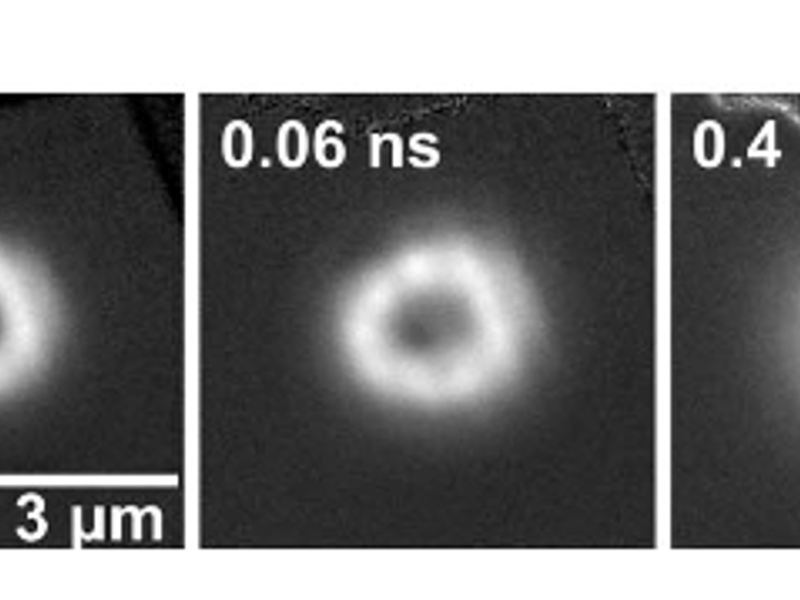
Engineering exceptional transport in van der Waals superatomic semiconductors
The PIs of IRG2 have substantially refined synthetic control over the synthesis of superatoms and their assemblies into macroscopic single crystals. They are now leveraging this control to engineer new, exceptional semiconductor transport properties not seen in any other material.
May 28, 2024
Columbia University in the City of New York
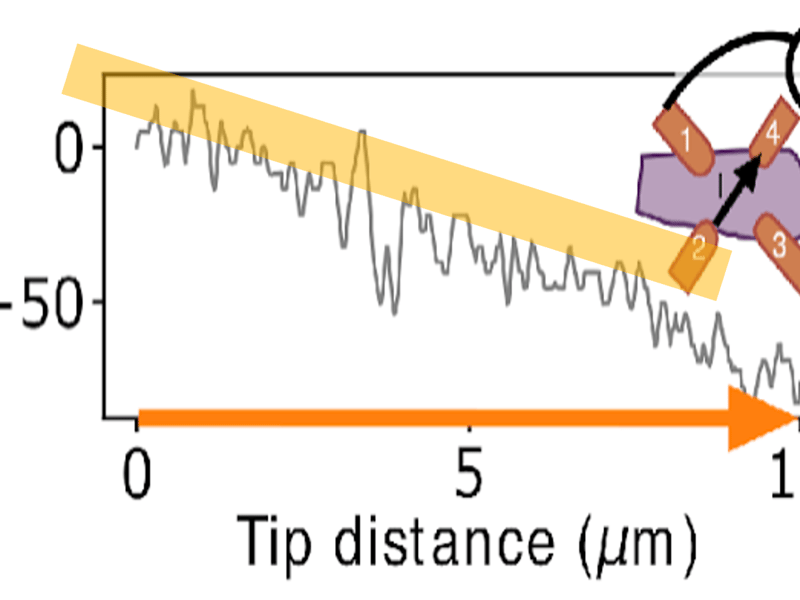
Programming magnetic domains in ferrimagnetic MnSb2Te4
Mn(Bi, Sb)2Te4, a family of MTMs with highly tunable properties, is an ideal playground for studying the interplay of band topology with magnetism. While previous work has focused on uniform ordered phases, here we ask: How can we control the electronic properties of Mn(Bi, Sb)2Te4 using the mesoscale structure of magnetism?
May 22, 2024
University of Pennsylvania
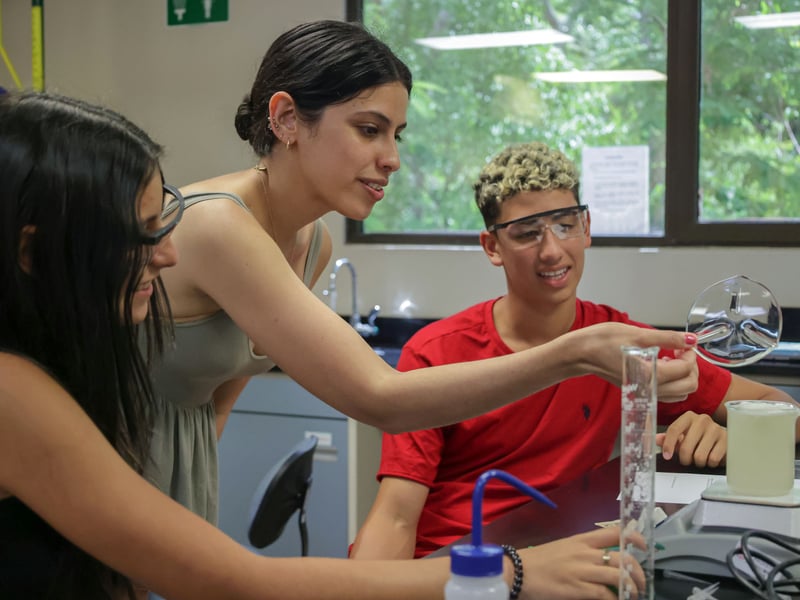
Experimenta con PREM
Mark Licurse & Ashley Wallace, University of Pennsylvania
Experimenta con PREM is a two-week hands-on research program for high school students run annually at the University of Puerto Rico (UPR) Humacao & Cayey campuses. It remains a core program for the UPR-Penn PREM program with a history of attracting talented and motivated high school students to materials research; since its inception in 2005, 100% of students have graduated from high school and 78% pursue STEM after.
May 22, 2024
University of Pennsylvania
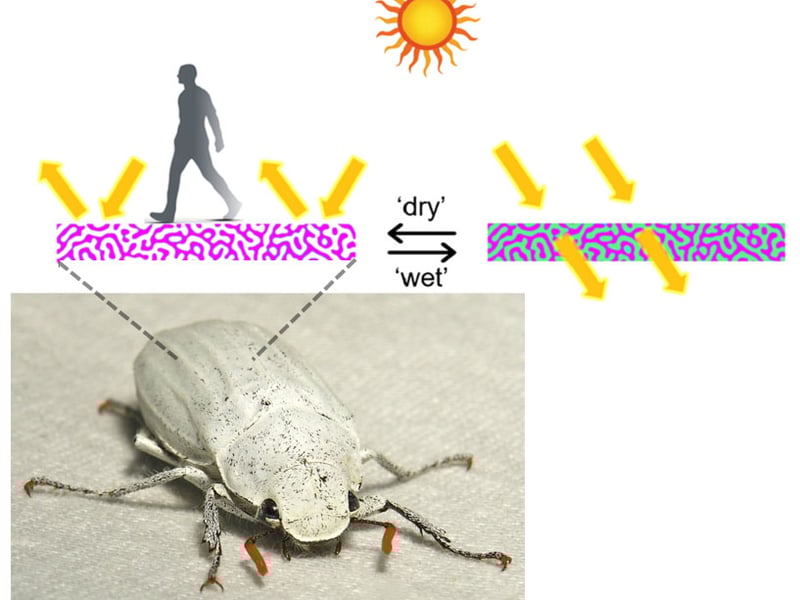
Beetle Scales Inspire a Passive Daytime Radiative Cooling Coating
Kathleen Stebe and Daeyeon Lee, University of Pennsylvania
Passive daytime radiative cooling (PDRC) coatings provide an eco-friendly and cost-effective alternative to cool surfaces and structures. Ideally, these coatings would have excellent cooling performance in thin, mechanically robust layers that could switch from rejecting heat to accepting heat during periods of low sunlight and would be produced by low-cost and scalable methods.
May 22, 2024
University of Pennsylvania
Architecting Crack Tips to Enhance Fracture Toughness
Kevin Turner (University of Pennsylvania), Michal Budzic (Aarhus, Denmark)
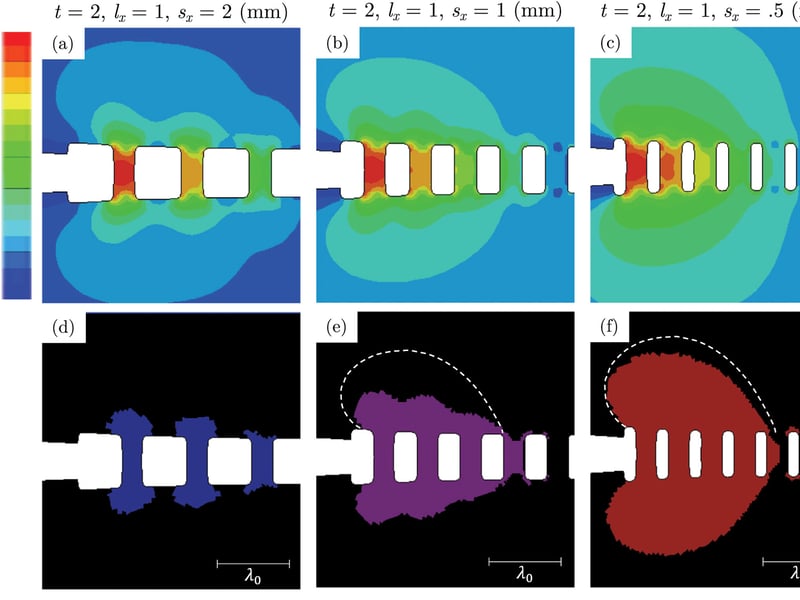
One of the primary ways that materials fail in operation is by the formation and propagation of cracks during loading, often leading to sudden, catastrophic events.
The ability of a material to withstand fracture is described as its toughness. Over the years, researchers have developed a variety of way to enhance material toughness, thereby improving the ability of materials to withstand applied loads, but often at the cost of reducing overall strength.
May 21, 2024
University of Pennsylvania
New Configuration Transitions of Nematic Liquid Crystals in Drops Induced by Magnetic Fields
Arjun Yodh, James Kikkawa, University of Pennsylvania, Peter Collings, Swarthmore College
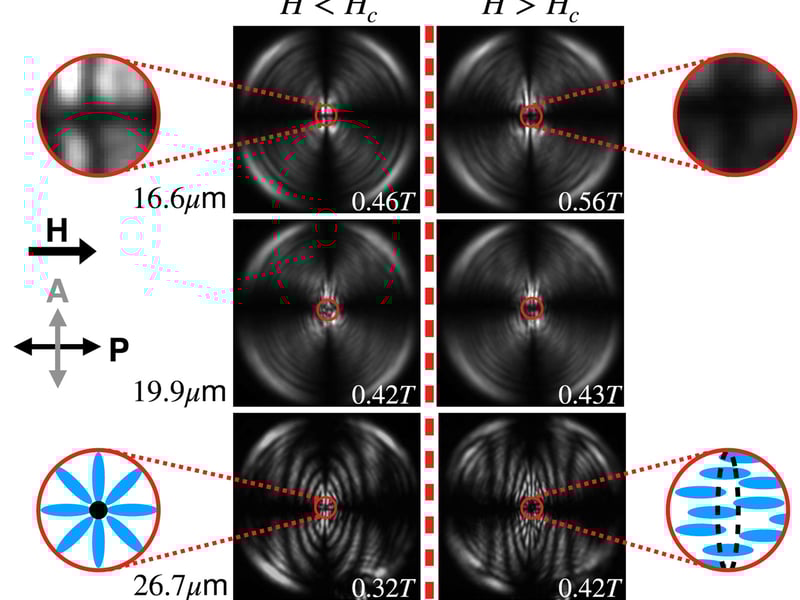
IRG-3 researchers Yodh, Kikkawa and Collings made a significant discovery about the behavior of liquid crystals (LCs) in droplets exposed to a magnetic field. LCs are unique materials that flow like liquids but also have some order (orientational order) like crystals. In this study, the researchers focused on a specific type of LC phase called a nematic. Field-induced “switching” of nematic liquid crystals (NLCs) in planar geometries is the basis of LC displays. Here, NLCs were put in spherical drops with special molecules (surfactants) on the drop surface that align the molecules, or NLC director, perpendicular to the droplet surface and force a topological hedgehog defect to form at the drop center. Field-induced switching in this case differs fundamentally from the planar cells due to confinement geometry and the topological defect.
May 21, 2024
University of Pennsylvania
Controlling Nanoparticle Assemblies with Dendritic Ligands
Christopher Murray and Chinedum Osuji, University of Pennsylvania
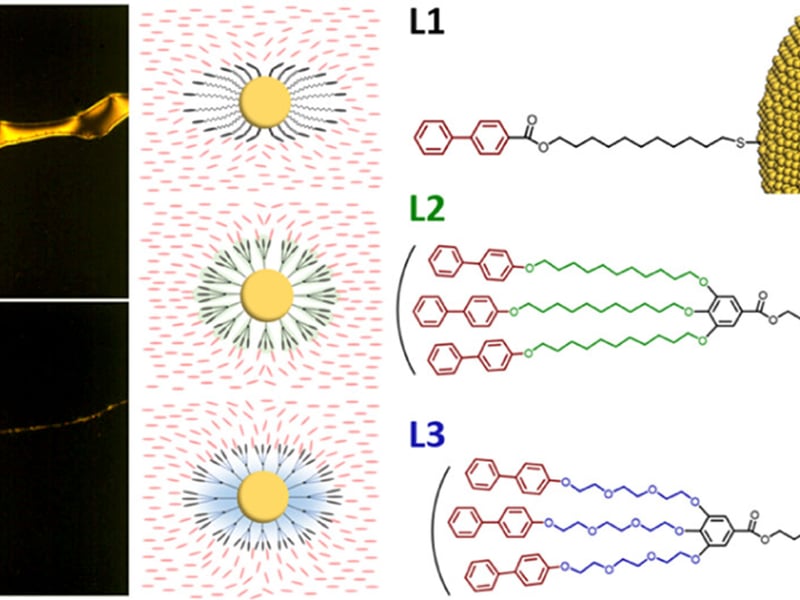
Liquid crystals are soft materials which see frequent use in optical displays and other smart devices. This is because they can change their optical properties (such as light transmission and polarization) when an electric field is applied. This allows them to selectively block or transmit light, creating the pixels that form images on the screen. Similarly, nanoparticles are materials that can have different optical properties that depend on their size.
In this work, Penn researchers have developed new liquid crystal-nanoparticle hybrid systems. They have integrated specially synthesized molecules known as “dendritic promesogenic ligands” that can attach to the nanoparticles.
May 21, 2024
University of Pennsylvania
Understanding Deformation in Disordered Materials
Robert Riggleman, Douglas Durian and Andrea Liu, University of Pennsylvania
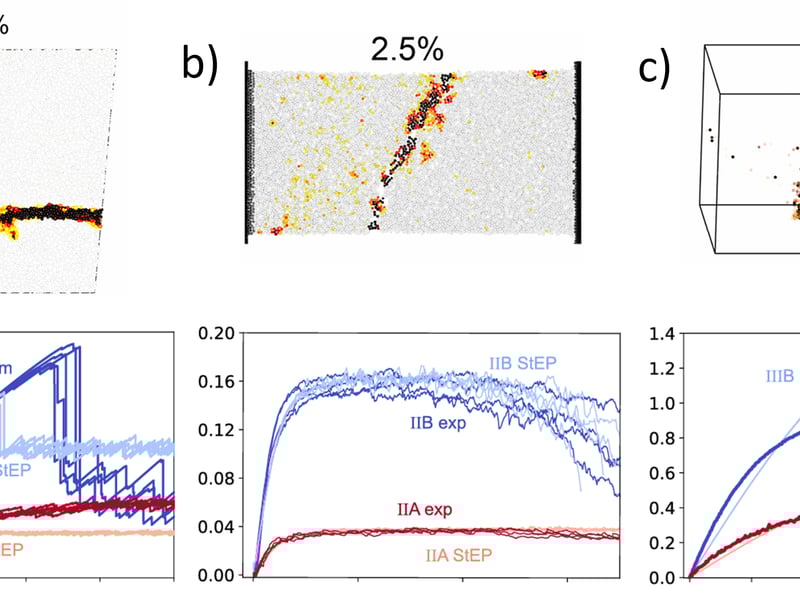
Disordered particulate solids are ubiquitous in items ranging from plastic to concrete. Despite their prevalence, applications can be limited because they are often brittle. In contrast, ductile materials can be deformed smoothly and significantly without fracturing. Strategies for tuning ductility of disordered solids are empirical and system-specific.
Liu, Riggleman and Durian used computer simulations of atomic and polymeric glasses and laboratory experiments on granular packings to develop a general Structuro-Elasto-Plastic (StEP) framework for understanding large-scale deformation of disordered solids in terms of the system-specific interplay between local structure, local rearrangements and larger-scale elasticity.
May 21, 2024
University of Pennsylvania
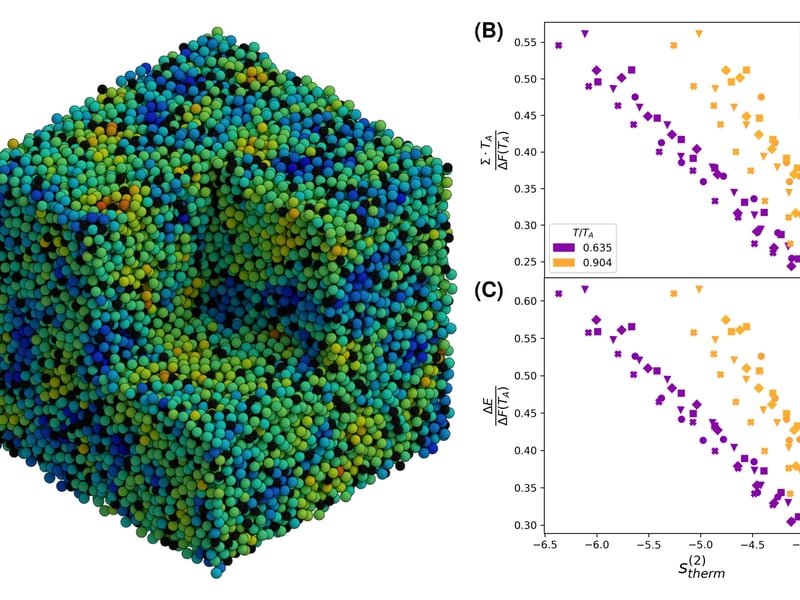
Predicting the Softness of Glasses from Thermodynamics
Paulo Arratia and Robert Riggleman (University of Pennsylvania)
The properties of glasses – disordered, amorphous materials – can be hard to predict because of this lack of long-range order and the associate properties of crystal symmetry.
Work in this IRG has developed two fundamental descriptors to describe glass properties. The first of these – softness – is a machine-learning derived descriptor that characterizes structural defects in glasses and predicts rearrangements or yield that will occur in disordered materials in response to applied loads. The second – excess entropy – is a thermodynamic quantity that is a simple function of that describes the deviation of atomic arrangements from what would be predicated from ideal gas theory.
May 20, 2024
Big Idea: Understanding the Rules of Life
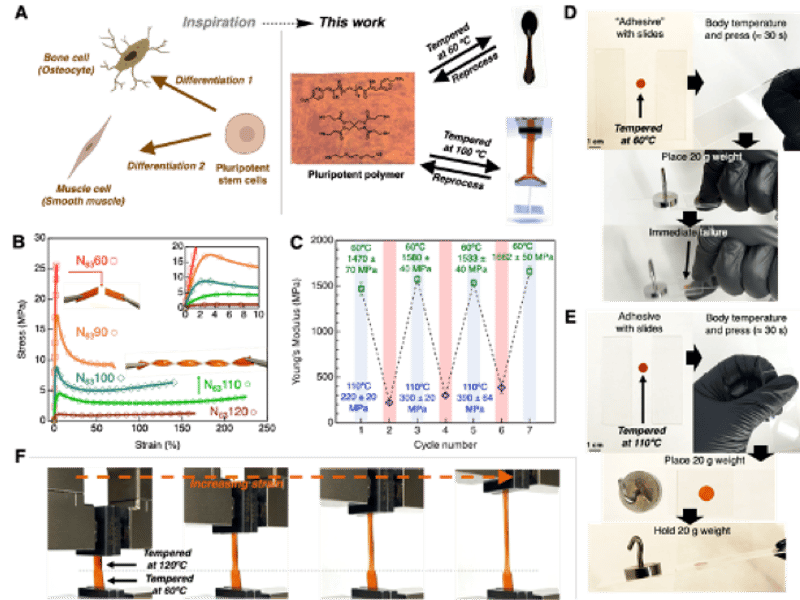
Accessing pluripotent materials through tempering of dynamic covalent polymer networks
In this highlight, researchers at the University of Chicago MRSEC report the development of a polymeric, pluripotent material that can be tempered (akin to the process in metallurgy) to access a wide range of room temperature mechanical properties, from stiff and high strength to soft and extensible, from a single feedstock. The feedstock was composed of a benzalcyanoacetate-based Michael acceptor, a tetrathiol crosslinker, and a dithiol chain extender to form dynamic thia-Michael networks.
Showing 121 to 130 of 1452