Highlights
May 20, 2024
Big Idea: Machine Learning / Artificial Intelligence, Understanding the Rules of Life
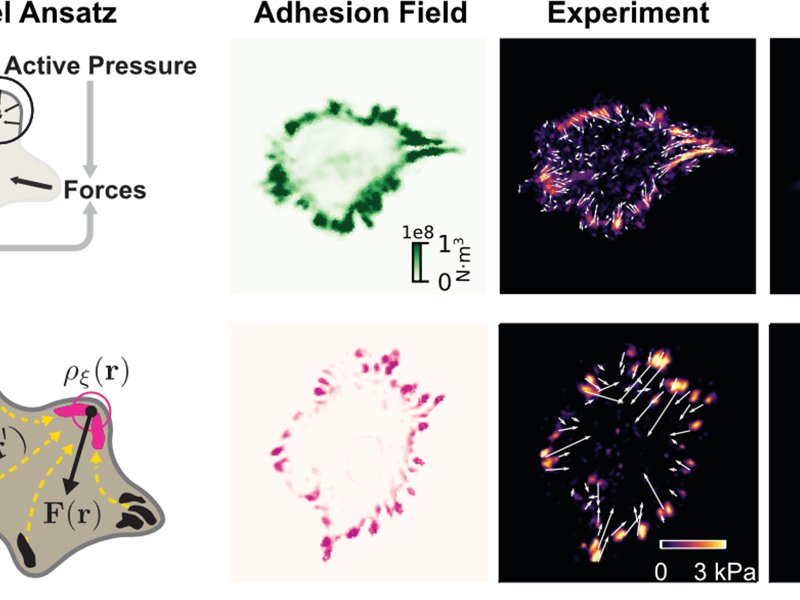
Machine learning interpretable models of biomaterials from chemistry
This work, carried out by the University of Chicago MRSEC, shows how to integrate neural networks in the construction of predictive phenomenological models in cell biology, even when little knowledge of the underlying microscopic mechanisms exist.
May 16, 2024
University of California, Irvine
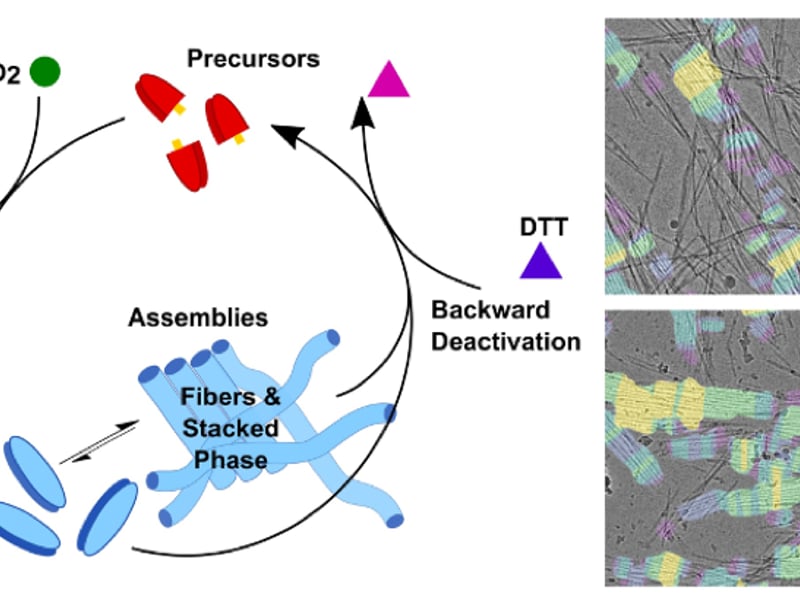
CryoEM finds complexity in structural evolution of active materials
UCI MRSEC researchers have performed the first in-depth time-resolved cryo-electron microscopy study on molecular active materials formed under dissipative self-assembly conditions and compared the results to the same molecular formed under thermodynamic control. They found that the dissipative self-assembly conditions can stabilize the formation on transient, thermodynamically unstable phases and that these phases can be highly ordered.
May 16, 2024
University of California, Irvine
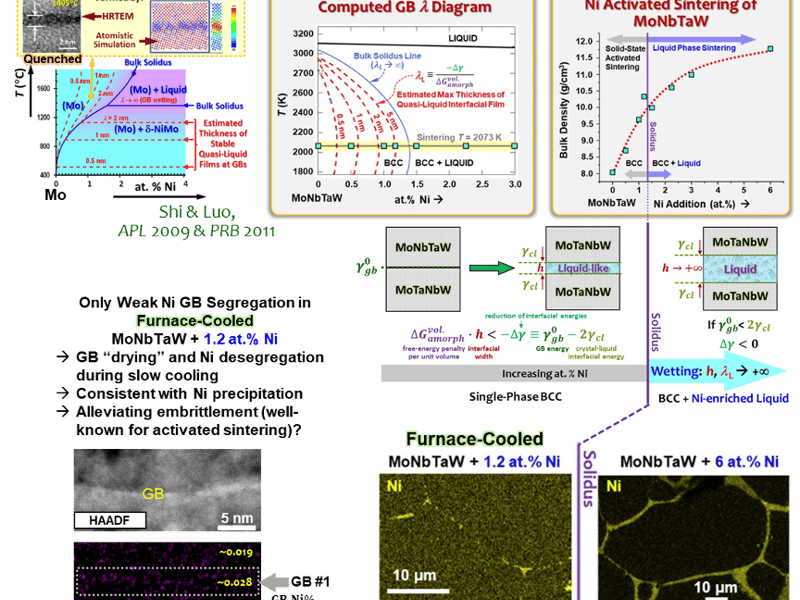
Discovery of Ni Activated Sintering of MoNbTaW Guided by a Computed Grain Boundary “Phase” Diagram
This study, carried out by researchers at UCI MRSEC, demonstrated the first example of activated sintering of a high-entropy alloy. It also revealed a segregation-induced grain boundary prewetting (disordering) transition.
May 16, 2024
Pennsylvania State University
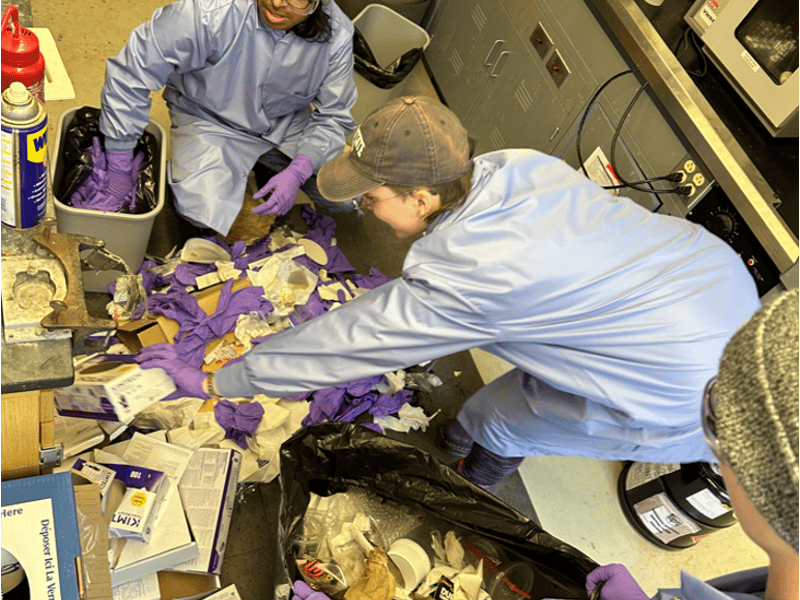
Sustainability efforts gain institutional support and international recognition
The MRSEC’s sustainability initiative for research labs expanded in its second year to 29 labs across Penn State University Park and six branch campuses. Over 400 researchers have been involved thus far. Labs completing My Green Lab certification can be paired with one of 17 undergraduate Sustainable Lab Ambassadors who apply their sustainability training to the lab setting through engaged scholarship.
May 16, 2024
Big Idea: Quantum Leap
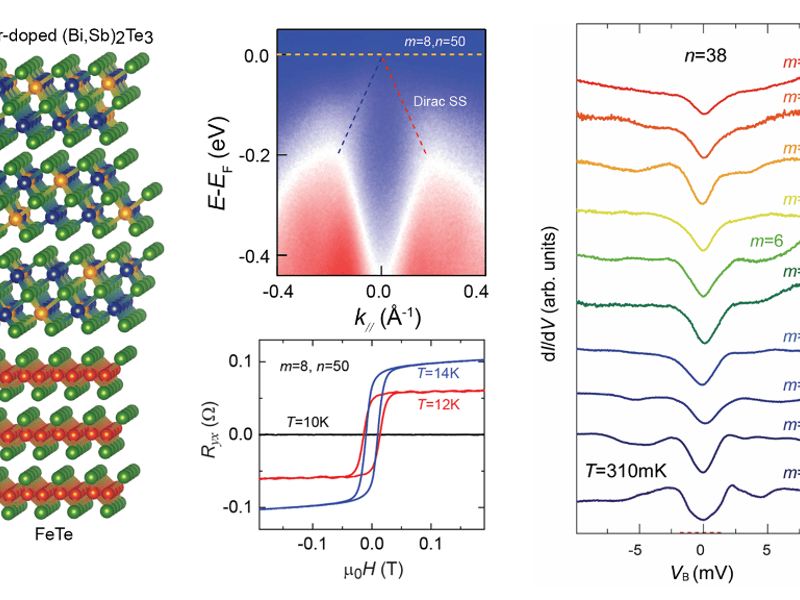
Interface-induced superconductivity in magnetic topological insulators
An IRG1 team employed molecular beam epitaxy to synthesize heterostructures stacking a ferromagnetic topological insulator with a quantum anomalous Hall state, Cr-doped (Bi, Sb)2Te3, and an antiferromagnetic iron chalcogenide, FeTe, with an atomically sharp interface. An unexpected phenomenon emerges: interface-induced superconductivity.
May 16, 2024
Big Idea: Quantum Leap
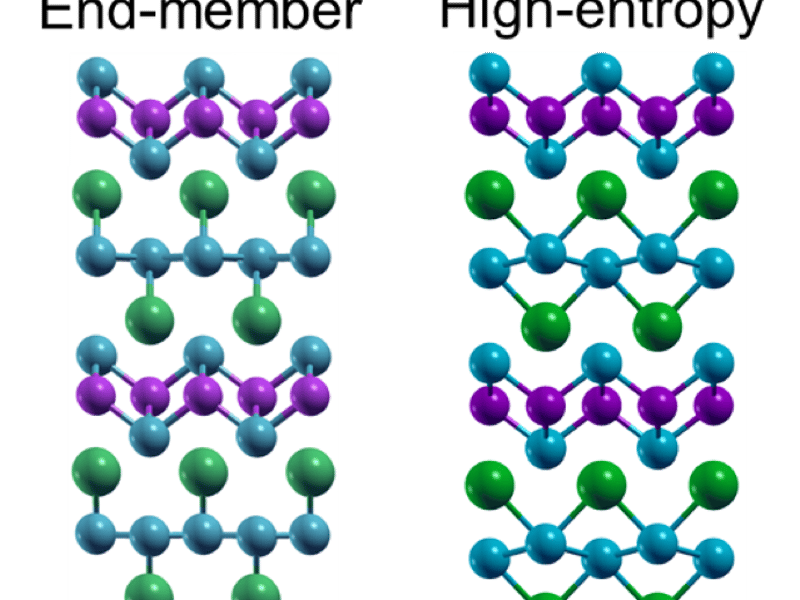
High-entropy engineering of the crystal and electronic structures in a Dirac material
Quantum materials have the potential to revolutionize technologies ranging from sensing to telecommunication and computation. However, advancement has been limited by the development of topological and Dirac materials. IRG2 researchers demonstrated a novel and widely applicable strategy to engineer relativistic electron states to develop such materials through a high-entropy approach.
May 15, 2024
University of California, Santa Barbara
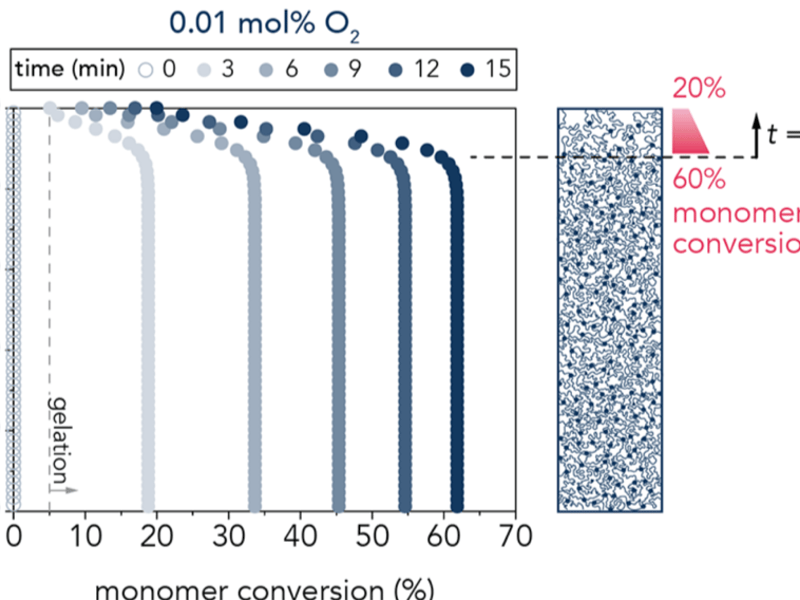
Superlubricious Hydrogels from Oxidation Gradients
Chau, Edwards, Helgeson, Pitenis - University of California, Santa Barbara
Hydrogels are hydrated three-dimensional networksof hydrophilic polymers that are commonly used in the biomedical industry due to their mechanical and structural tunability, biocompatibility, and similar water content to biological tissues.
May 15, 2024
University of California, Santa Barbara
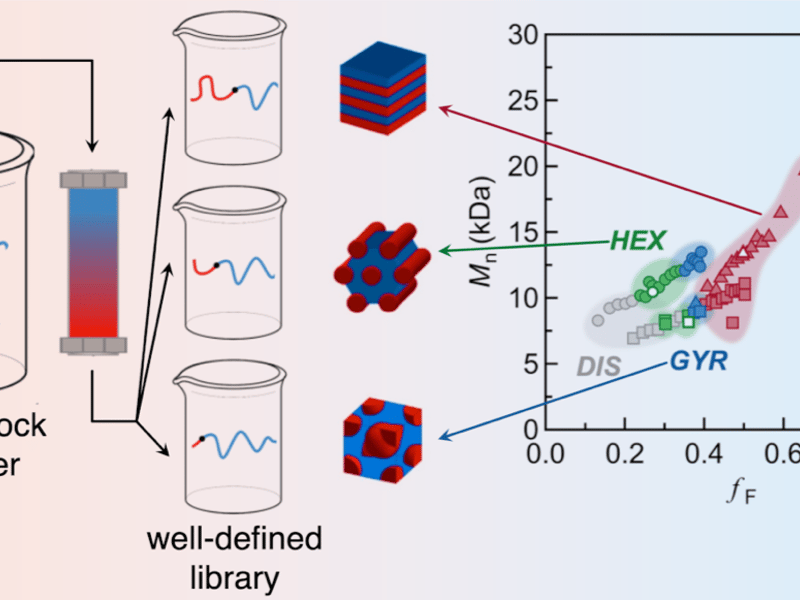
Rapid Generation and Screening of Complex Polymer Morphologies
Murphy, Skala, Kottage, Kohl, Li, Zhang, Hawker, Bates - University of California, Santa Barbara
Block copolymers, with their complex morphologies, are widely used in many applications. A grand challenge associated with these materials is accelerating their design and discovery.
UC Santa Barbara MRSEC researchers have developed a versatile and efficient strategy by rapidly building expansive, high-quality, and detailed block copolymer libraries through a combination of controlled polymerization and chromatographic separation. X-ray scattering studies aid in screening block copolymer morphology.
May 15, 2024
UMN Materials Research Science and Engineering Center
Record Voltage-Based Tuning of Thermal Conductivity in La0.5Sr0.5CoO3-d
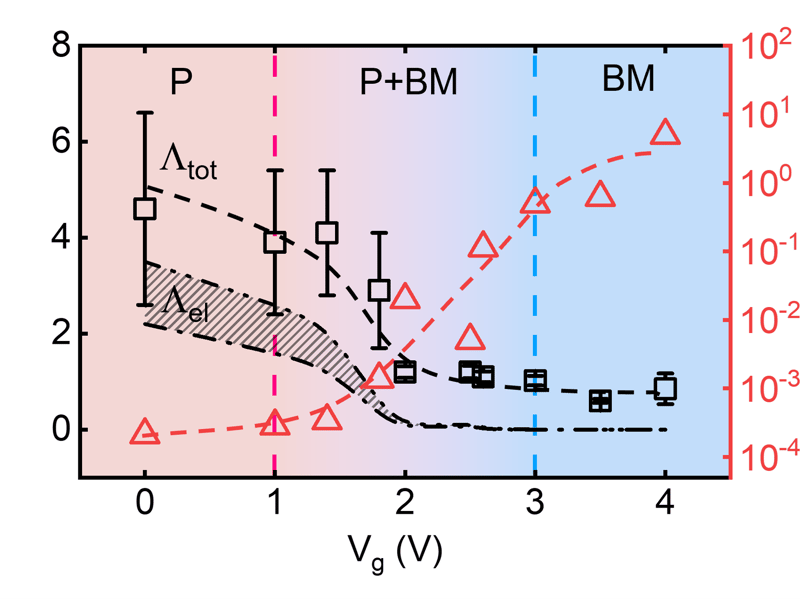
A team from IRG-1, working with collaborators at Argonne National Laboratory and the University of Utah, have demonstrated continuous room-temperature electrical tuning of the thermal conductivity of La0.5Sr0.5CoO3-d by a factor of more than five (a record for a single-step process) via ion-gel gating. Application of a gate voltage in these devices drives a transformation from a metallic perovskite phase to an insulating brownmillerite phase via the formation and migration of oxygen vacancies, realizing the record range of measured thermal conductivities.
May 15, 2024
UMN Materials Research Science and Engineering Center
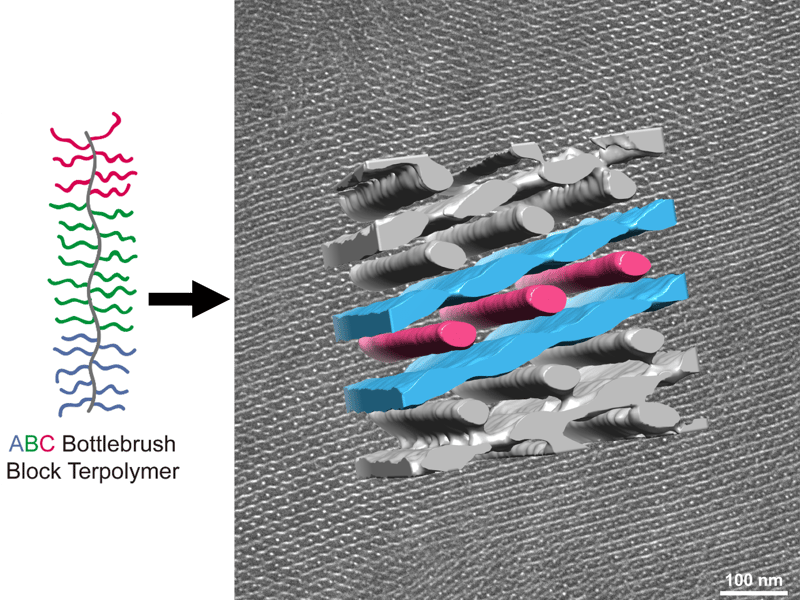
Unprecedented Nanoscale Morphology in Self-Assembled Bottlebrush Block Polymers
Soft materials known as molecular bottlebrush block polymers comprise a polymer backbone with densely grafted polymer side chains. These materials have attracted much attention for their ability to self-assemble into ordered structures with relatively large periodicities (over 50 nm), which are rarely achieved with simpler linear polymers. However, only self-assembly into lamellar and cylindrical phases has been reported in diblock bottlebrush materials.
Showing 131 to 140 of 1452