Highlights
May 16, 2023
University of California, Irvine
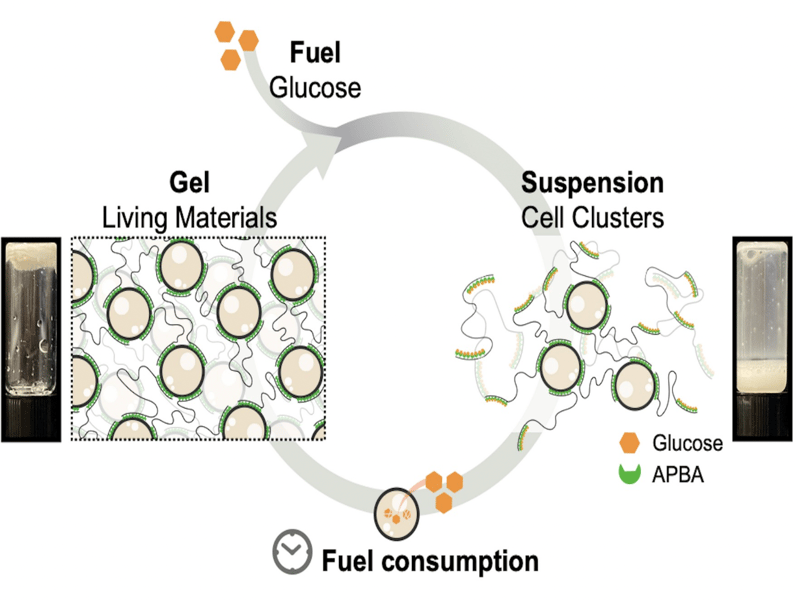
Sugar-fueled Dissipative Living Materials
Hyuna Jo, Serxho Selmani, Zhibin Guan, Seunghyun Sim (University of California, Irvine)
The first example of synthetic living material featuring dissipative behaviors directly controlled by the fuel consumption of their constituent cells.
May 16, 2023
Big Idea: Understanding the Rules of Life
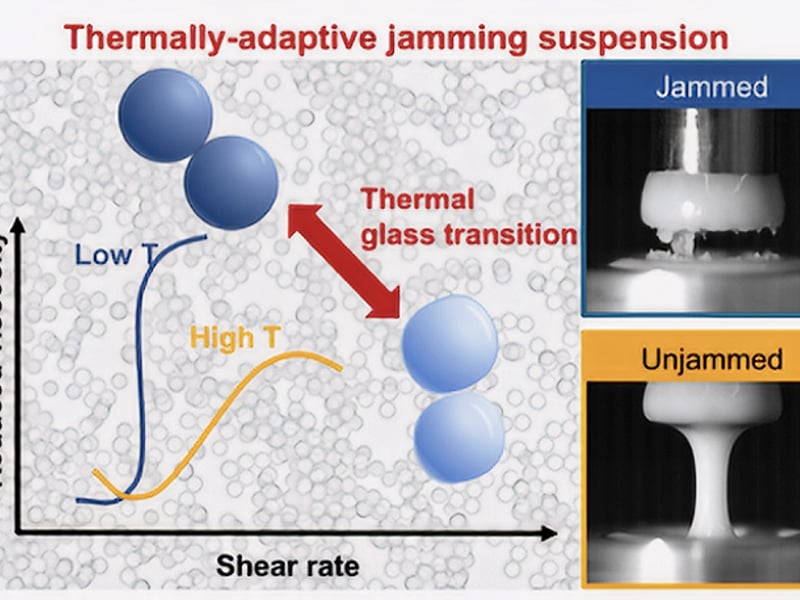
Leveraging the Polymer Glass Transition
A collaboration between the de Pablo, Rowan and Jaeger groups at the University of Chicago developed a novel class of suspensions with stimuli-responsive polymer particles to be able to transition reversibly between liquid to solid behavior in response to temperature,

May 16, 2023
Big Idea: Understanding the Rules of Life
Direct Synthesis and CVD of 2D MXenes
Novel chemical reactions enable scalable and atom-economic synthesis of two-dimensional metal carbides and nitrides (MXenes). These directly synthesized MXenes from the University of Chicago show excellent energy storage capacity for Li-ion intercalation.
May 15, 2023
University of California, Santa Barbara
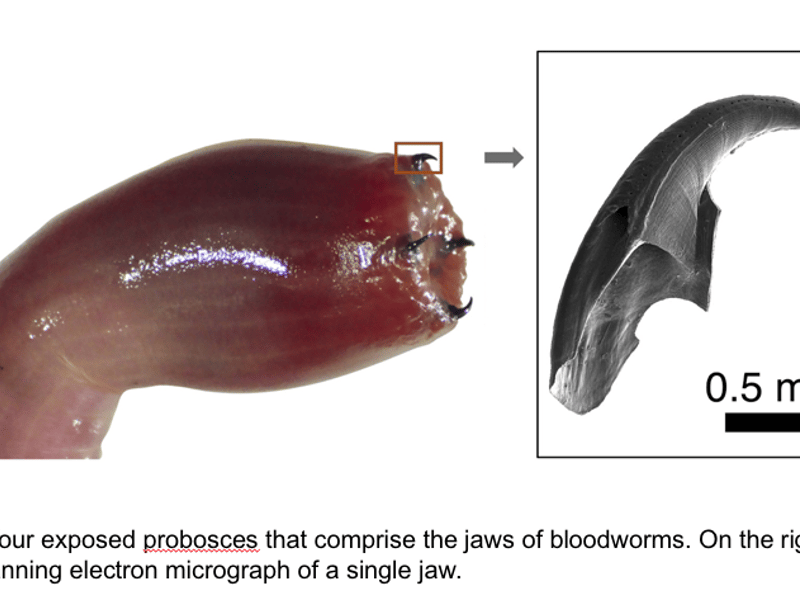
A Multi-tasking Polypeptide from Bloodworm Jaws
Matthew Helgeson, UCSB J. Herbert Waite, UCSB
The key protein that helps bloodworms form copper-based mineral composites to make very strong jaws has been identified along with the several functions that it serves.
May 15, 2023
University of California, Santa Barbara
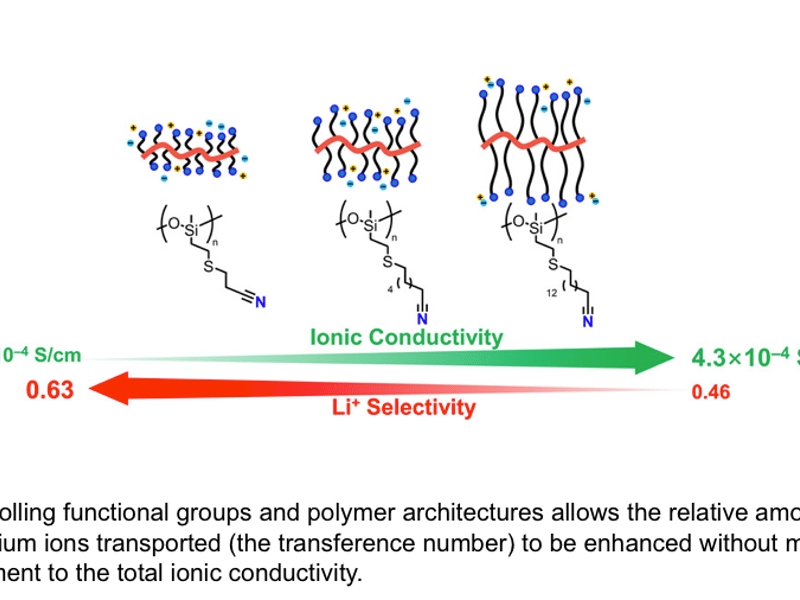
High-Performance Polymer Solid Electrolytes
Raphaële Clément, UCSB Javier Read de Alaniz, UCSB Rachel Segalman, UCSB
New lithium-ion transporting polymers, suitable for use as solid electrolytes in lithium ion batteries have been developed based on controlling the dielectric properties of polymers and details of the polymer architecture.
Many lithium-transporting polymers, which could play a central role in the future of solid-state lithium batteries, suffer from poor lithium conductivity, even if the total conductivity could be high due to the counterions moving. MRSEC IRG-2 researchers have devised strategies to ensure that it is the lithium that moves, making these materials useful.
May 15, 2023
University of California, Santa Barbara
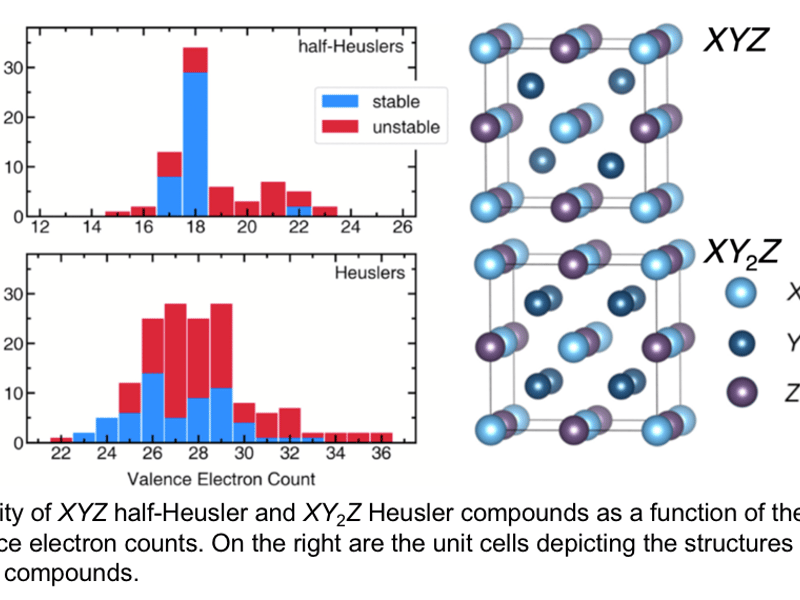
Heusler Compounds: To Alloy or Not to Alloy?
Justin Mayer, UCSB Ram Seshadri, UCSB
Rules for the creation of alloys within the family of Heusler compounds, which are ordered compounds formed between metals, have been broadly formulated.
Heusler compounds are important functional materials, used for their magnetic and thermoelectric properties. These rules will help in designing new materials with optimized functionality.
The results directly support the goals of IRG-1 Magnetic Intermetallic Mesostructures since the controlled formation of single-phase and mesostructured magnetic Heusler materials is central to the project.
May 15, 2023
University of California - San Diego
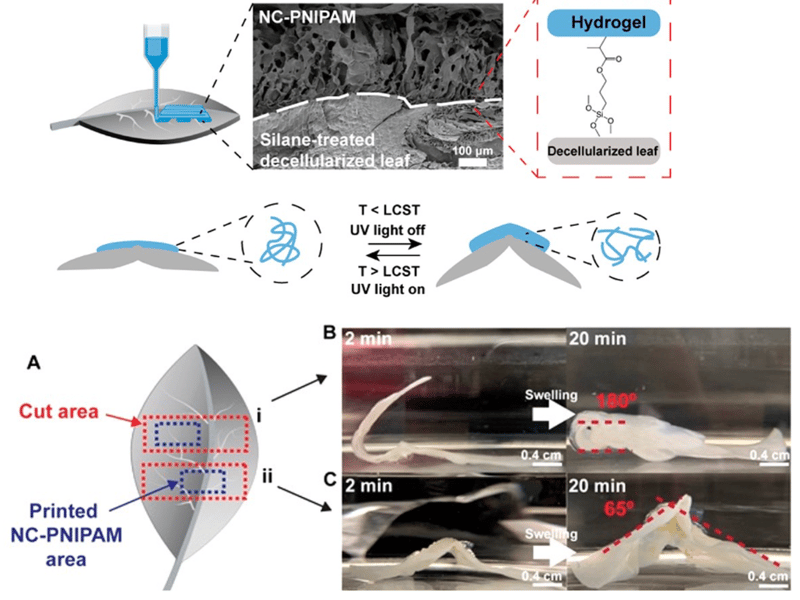
Plant Leaf ELMs Undergo Shape Shifting Driven by External Stimuli
Jiayu Zhao, Yvonne Ma, Nicole Steinmetz, Jinhye Bae, UC San Diego
Plant/polymer composite materials have been fabricated. These composite materials are stimuli responsive and can undergo shape-shifting behavior in response to temperature or light.
May 15, 2023
University of California - San Diego
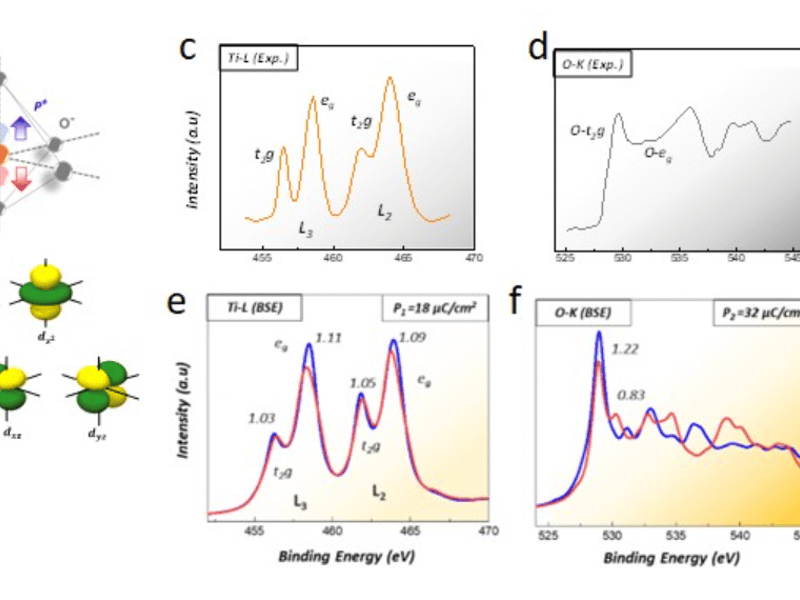
A Multiphysics Approach for the Self-Assembly of Nanocrystal Checkerboards
Pedram Abbasi, David Fenning, Tod Pascal, UC San Diego
IRG1 has developed a toolkit for carrying out simulated X-ray adsorption spectroscopy (XAS). XAS is a powerful technique for understanding the surface local structure and chemistry of complex interfaces at the nanoscale.
May 15, 2023
University of California - San Diego
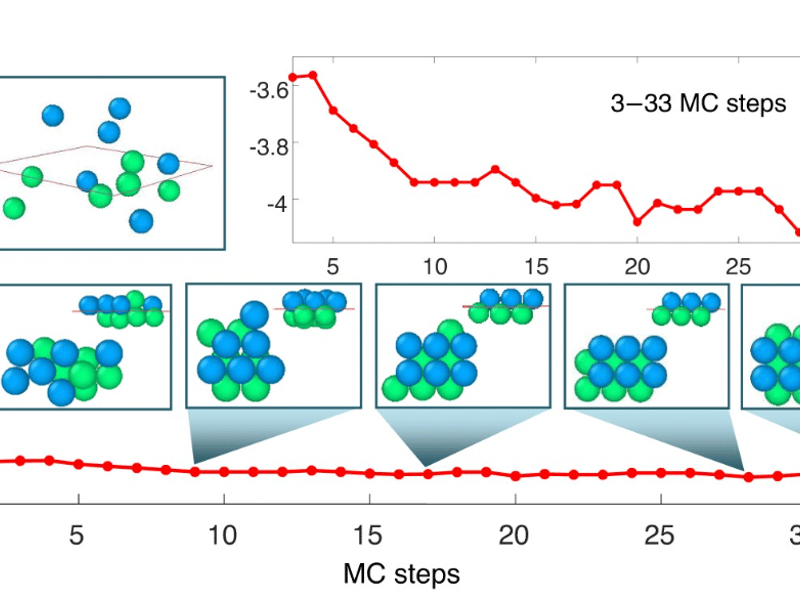
Discovery of bilayer nanoparticle (NP) superlattices using global Monte Carlo optimization
Yilong Zhou, Gaurav Arya, Duke University
IRG1 has developed a computational framework for understanding how nanoparticles (NPs) assemble at the interface between two immiscible fluids.
May 15, 2023
University of California - San Diego
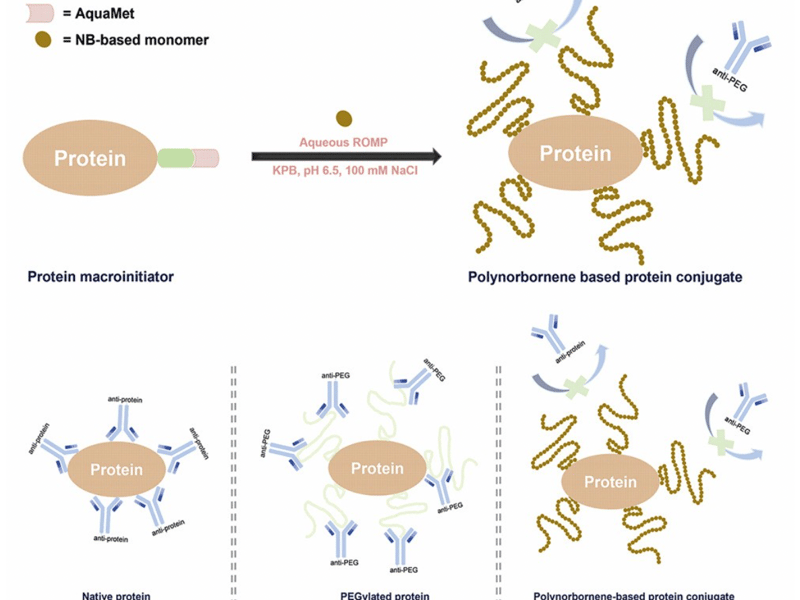
Where Materials Begin and Society BenefitsFirst Demonstration of Controlled Grafting-from ROMP Bioconjugates
Derek Church, Elizabathe Davis, Adam Caparco, Nicole Steinmetz, Jon Pokorski, UC San Diego
This is the first demonstration of living ring opening metathesis polymerization (ROMP) from a biological substrate.
Showing 191 to 200 of 1452