Highlights
Mar 29, 2024
Princeton University
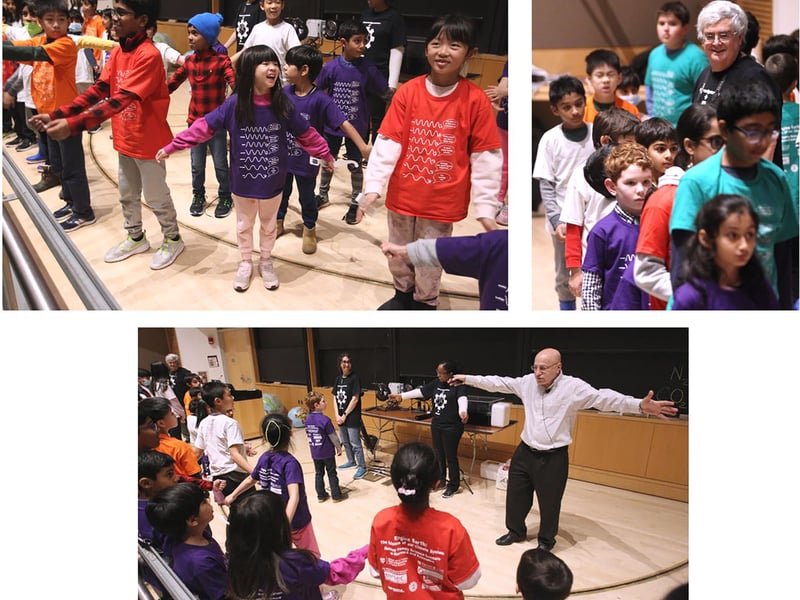
Holiday Lecture 2022: “Engine Earth”
The 2022 Holiday Science Lecture “Engine Earth” was held at Princeton University on December 3, 2022 with over 500 people attending two lectures at McDonnell Hall.
Mar 29, 2024
Princeton University
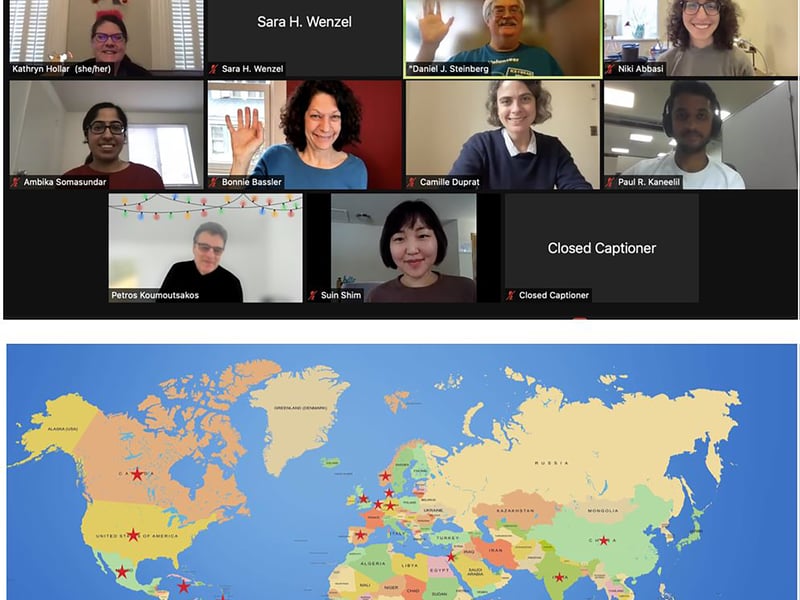
Holiday Lecture 2021 “Let it Flow: A Festival about Fluids”
PCCM partnered with the Harvard University MRSEC to host the annual Holiday Lecture on December 11, 2021. Taking on a completely original and new topic for 2021, PCCM focused on fluid dynamics in its presentation: Let it Flow: A Festival about Fluids.
Mar 20, 2024
Harvard University
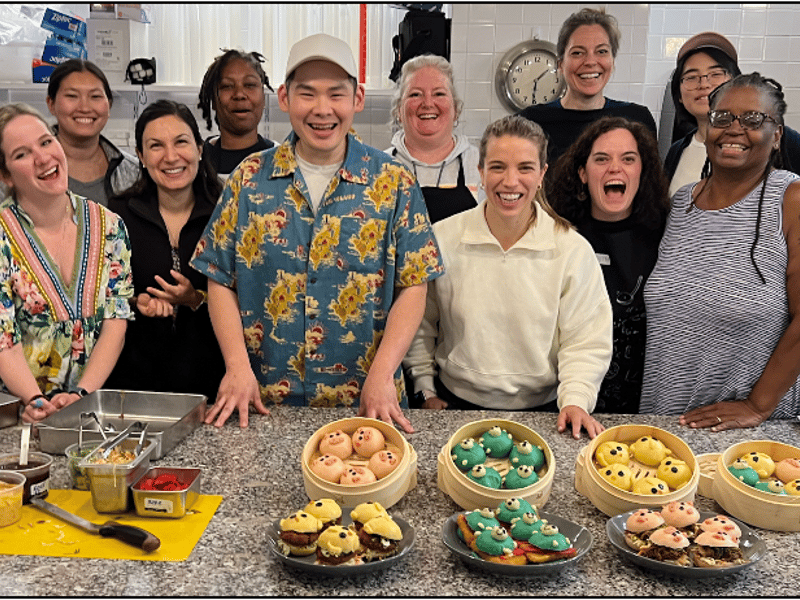
Making Soft Matter Accessible: Teacher Workshops on Science & Cooking
The Harvard MRSEC engages K-12 teachers and students through the science of everyday materials. Through a collaboration with Bite-Scized Education, led by teacher Kate Strangfeld, the MRSEC co-develops workshops for teachers and after-school programs for K-12 students that are modeled on the Science and Cooking course developed by David Weitz and Michael Brenner, and teach science through food and cooking.
Mar 20, 2024
Harvard University
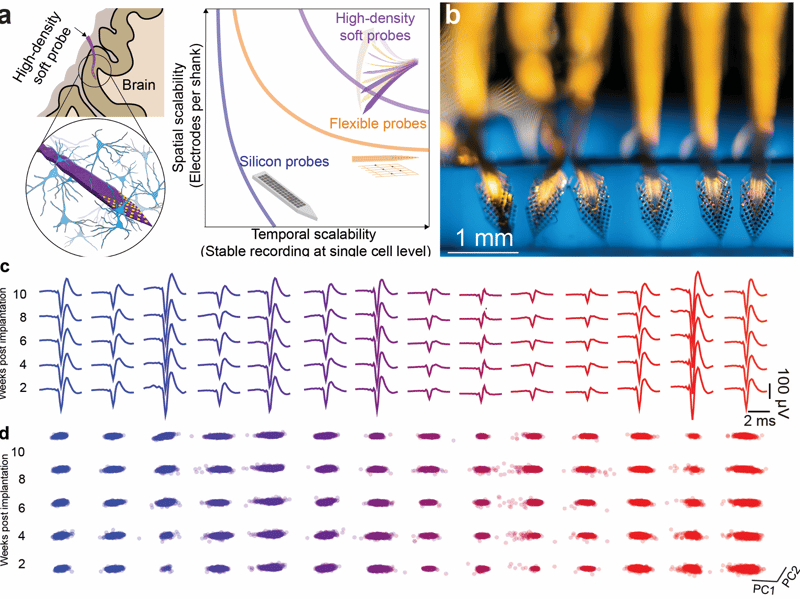
Soft Bioelectronics for In Vivo Neural Probes
Existing high-resolution neural recording devices cannot achieve simultaneous scalability on both spatial and temporal levels due to a trade-off between sensor density and mechanical flexibility. A team led by Liu, Bertoldi, Kozinsky, and Suo has introduced a 3D stacking implantable electronic platform, based on perfluorinated dielectric elastomers and tissue-level soft multilayer electrodes, that enables spatiotemporally scalable single-cell neural electrophysiology.
Feb 26, 2024
The University of Tennessee - Knoxville
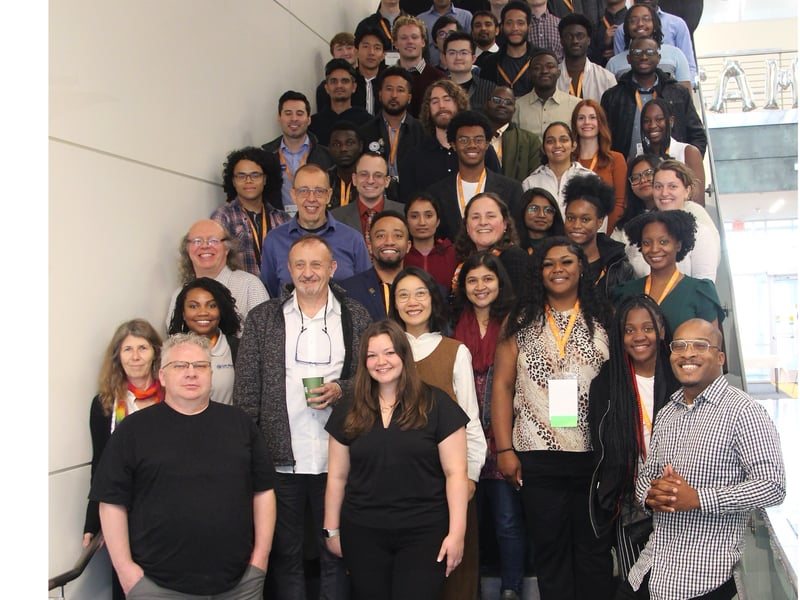
UTK Knoxville MRSEC Partners with the National Society of Black Physicists to Bring Conference into the Laboratories
The National Society of Black Physicists recently held their Annual Conference, the largest academic meeting of minority physicists in the US in Knoxville, Tennessee.

Jan 31, 2024
University of Delaware
Meet a Scientist Day: hands-on demos for preK-8 students
An outreach event led by CHARM postdocs and grad students drew almost 200 attendees in partnership with a local library. Students aged preK-8 participated in seven hands-on demonstration booths, including several booths that focused on materials science principles.
Jan 31, 2024
Big Idea: Quantum Leap
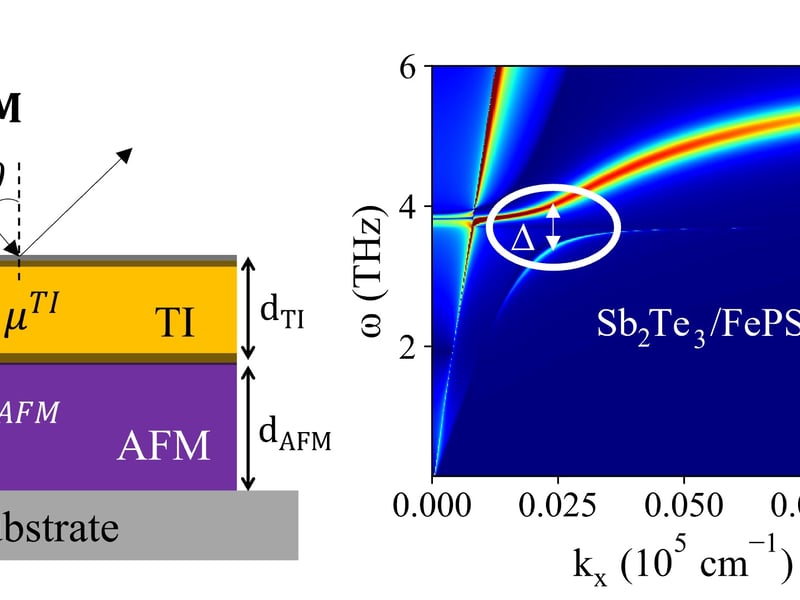
Phonon-mediated strong coupling between a three-dimensional topological insulator and a two-dimensional antiferromagnetic material
This research effort, carried out by the University of Delaware's MRSEC, provides a potential hybrid material platform for optoelectronic device applications in the THz frequency domain.
Jan 31, 2024
University of Delaware
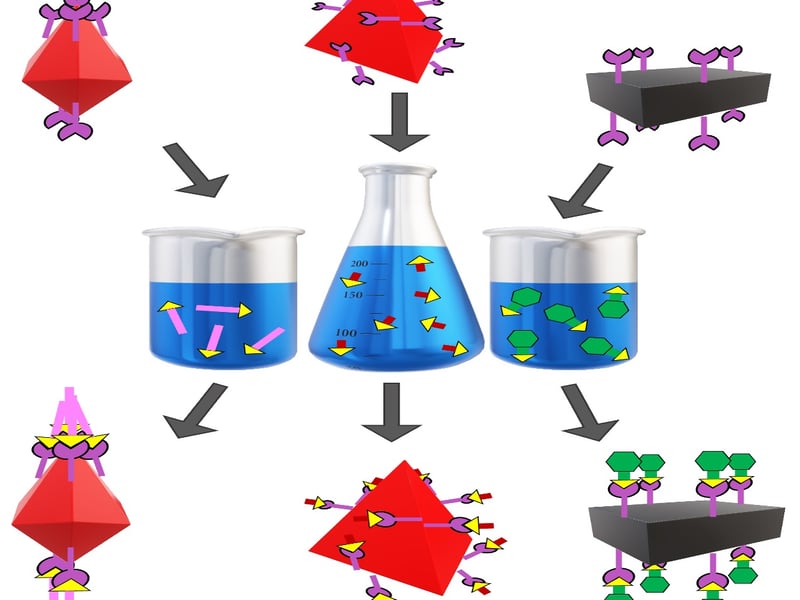
Rapid Modification of Porous Cages with Click Chemistry
The University of Delaware MRSEC has shown, for the first time, that click chemistry can be used to functionalize multiple families of porous cages.
Jul 5, 2023
University of Pennsylvania
UPENN Outreach: Supporting Diversity, Equity, and Engagement in STEM
Mark Licurse & Ashley Wallace, University of Pennsylvania
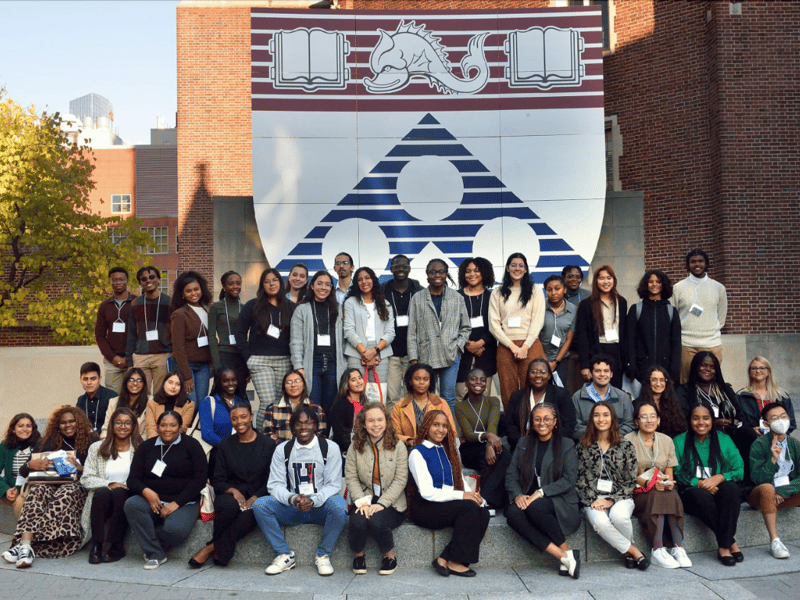
The LRSM spearheaded the inaugural Diversity Equity Engagement at Penn in STEM (DEEPenn STEM) weekend in October 2022. The initiative aims to proactively educate and recruit students from ethnically and racially minoritized communities (i.e. URMs), women, and first-generation low-income (FGLI) students to STEM-related graduate programs at Penn.
Jul 5, 2023
University of Pennsylvania
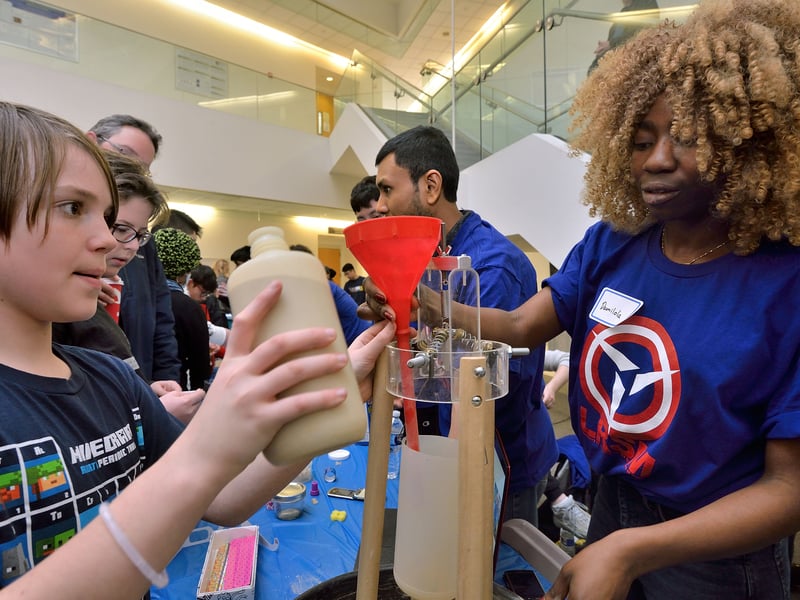
UPENN Outreach: 12th Annual Philadelphia Materials Day
Mark Licurse & Ashley Wallace, University of Pennsylvania
Philadelphia Materials Day is a collaborative effort between the University of Pennsylvania MRSEC and the Materials Science & Engineering Department at Drexel University to promote materials research in the region. The 12th annual Philadelphia Materials Day took place on February 11, 2023 at the Bossone Research Center at Drexel University.
Showing 161 to 170 of 1452